|
ACE Workshop participants visit Kafulu
Warehouse
By Frank Kadzakumanja
On 13 September, 2012 Agricultural
Commodity Exchange (ACE) organized a field visit to one of its
certified warehouses in Kafulu, Dowa, 70 km north of Lilongwe. The
session attracted participants from the donor sector, government
and development partners. Also present were business executives,
NGOs, traditional leaders and farmers. Receiving the participants
at the office premise in Kafulu, Mr George Funsani, Manager for
Kafulu Warehouse, said that ACE had assumed the integrated
management of storing grain in May 2012.Mr Funsani further
explained to the participants how deposits of grain are made and
how warehouse receipts are issued. Among other things, Mr Funsani
also explained how maize is kept to prevent pests through
fumigation. Participants were also given a chance to
ask questions and ACE staff through The Principal advisor, Mr
Kisrtian Schach Moller took time to explain the functions.
|
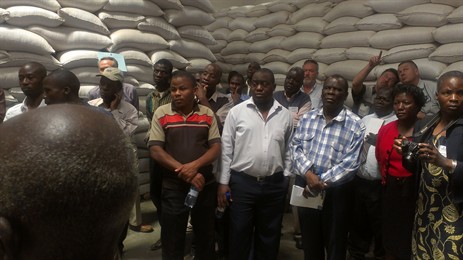 Participants Listen to presentation by
Warehouse MGR Mr Funsani Participants Listen to presentation by
Warehouse MGR Mr Funsani
|
|
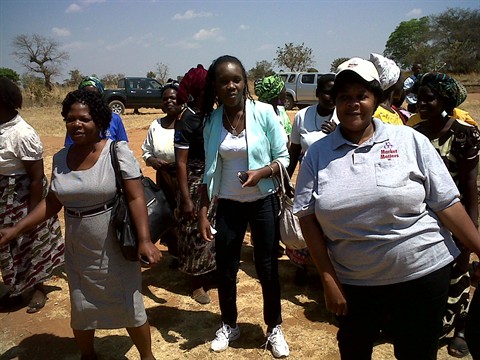
Kafulu women Farmers welcome Field visit participants with a
dance
|
Thereafter, there was a function where there were speeches,
dramas and
traditional dances. The Member of Parliament for the area,
Honorable Abel
Kayembe said that he was very happy with the development brought
to the area by ACE and recommended that the exercise be extended to
other areas as well so that more farmers are assisted. Speaking on
behalf of ACE, Structured Trade Officer for ACE, Mr Frank
Kadzakumanja commended smallholder farmers and Kafulu farmers
association for their support and explained how the warehouse
receipt has benefited the first farmers who have recently brought
in more commodity.
Also speaking at the same function was T.A. Kayembe who also
commended ACE for the good work and thanked the farmers for their
enormous support.
Agricultural Commodity Exchange (ACE) aims at transforming
Malawi's agricultural sector in selected agricultural staple
commodities to achieve increased competitiveness on the domestic,
regional and international markets.
|